Ευρωεκλογές 2024: Τόσο μακριά, τόσο κοντά

ΤΟΝ ΤΕΛΕΥΤΑΙΟ ΚΑΙΡΟ δουλεύω πάνω σε ένα κείμενο του Frantz Fanon, ένα κεφάλαιο από το βιβλίο του Peau Noire, Masques Blanc (Μαύρο Δέρμα, Άσπρες Μάσκες). Όπως το συνηθίζει, ο Fanon ενσωματώνει στο κείμενό του άλλα κείμενα, μετατρέποντας τον λόγο του σε μια πολυφωνική συνήχηση της μαυρότητας. Πολλά αποσπάσματα προέρχονται από έργα του συμπατριώτη του ποιητή Aimé Césaire, συγκεκριμένα από τα βιβλία του Discours sur le colonialisme (Λόγος περί αποικιοκρατίας) και Cahier dun retour au pays natal (Σημειωματάριο μιας επιστροφής στην πατρίδα).

Η δύναμη του λόγου των δύο Μαρτινικανών πολιτικών στοχαστών είναι ασύλληπτη. Πέρα από τη δύναμη, όμως, η κριτική τους στην αποικιοκρατία και τον ιμπεριαλισμό χαρακτηρίζεται από μια φρεσκάδα, η οποία σπάνια απαντά σε κείμενα που έχουν γραφτεί στο πλαίσιο μιας συγκεκριμένης ιστορικής συγκυρίας – στην προκειμένη περίπτωση στο πλαίσιο των αντιαποικιακών εξεγέρσεων της πρώτης μεταπολεμικής δεκαετίας. Ο λόγος αυτός γίνεται ιδιαίτερα επίκαιρος σήμερα, σε μία συνθήκη που οι δυτικές κοινωνίες, μέσω του πολιτικού εξωραϊσμού και του ιδεολογικού εξαγνισμού, επιχειρούν να σβήσουν τα σημάδια της βαρβαρότητας που επέδειξαν επί αιώνες απέναντι σε εκείνο το μέρος του κόσμου που θεωρούσαν υποδεέστερο και λιγότερο-από-ανθρώπινο – δηλαδή απέναντι στο μεγαλύτερο μέρος του κόσμου.

Όμως, παρά τις προσπάθειες εξαγνισμού, το σώμα του δυτικού πολιτισμού είναι άρρωστο. Έχει μολυνθεί από το ίδιο του το δηλητήριο.

Έτσι, μια υπέροχη μέρα, η μεσαία τάξη δέχεται ένα ισχυρό πλήγμα: Οι Γκεσταπίτες έχουν πιάσει πάλι δουλειά, οι φυλακές γεμίζουν, οι βασανιστές και πάλι επινοούν, τελειοποιούν, ανταλλάσσουν ιδέες πάνω από τους πάγκους εργασίας τους.

Οι άνθρωποι εκπλήσσονται, θυμώνουν. Λένε: «Είναι πολύ παράξενο αυτό. Όμως είναι απλά ο Ναζισμός, δεν θα διαρκέσει». Και περιμένουν, και ελπίζουν, και κρύβουν την αλήθεια από τον εαυτό τους: Είναι η βαρβαρότητα, η υπέρτατη βαρβαρότητα που στέφει, επισφραγίζει τις καθημερινές βαρβαρότητες. Ναι, είναι ο Ναζισμός, αλλά πριν γίνουν θύματά του, ήταν οι συνεργοί του. Ο Ναζισμός τον οποίο ανέχτηκαν πριν υποκύψουν σ’ αυτόν, τον αθώωναν, έκλειναν τα μάτια τους, τον νομιμοποιούσαν, γιατί μέχρι τότε είχε εφαρμοστεί μόνο εναντίον μη ευρωπαϊκών λαών. Τον Ναζισμό αυτόν ενθάρρυναν, γι’ αυτόν ήταν υπεύθυνοι· και αυτός σταλάζει, αναβλύζει, ξεχειλίζει από κάθε ρωγμή του δυτικού χριστιανικού πολιτισμού, μέχρι να τον καταβυθίσει σε μια αιματοβαμμένη θάλασσα (Césaire 1956, 14-15· μτφρ. Φιλιώ Χατζημπεκιάρη).

Όμως, υπάρχει μέθοδος στην τρέλα. Ο φασισμός δεν επιστρέφει στην Ευρώπη απλώς για να τιμωρήσει τους αποικιοκράτες που με τη βία και την επιβεβλημένη εξαθλίωση απανθρωποποίησαν το μεγαλύτερο κομμάτι του κόσμου. Επιστρέφει στην Ευρώπη, αφενός, γιατί δεν έχει πού αλλού να πάει. Η Ευρώπη είναι η πατρίδα του: αυτή τον γέννησε, αυτή τον εξέθρεψε, αυτή τον «χάρισε» στον υπόλοιπο κόσμο. Αφετέρου, γιατί η επιστροφή του φασισμού στην Ευρώπη είναι η αυτονόητη ιστορική εξέλιξη ενόψει του τέλους της αποικιοκρατίας. Επί αιώνες η ευμάρεια της Δύσης και η επιτυχία του μοντέλου κοινωνικής οργάνωσης του καπιταλισμού στηρίχτηκε στην άντληση πόρων από εκείνο το κομμάτι του κόσμου που «δεν άξιζε», «δεν δικαιούνταν» να κρατήσει αυτούς τους πόρους για τον εαυτό του, επειδή οι περιορισμένες ανάγκες και οι ανύπαρκτες γνώσεις του δεν του επέτρεπαν, ούτως ή άλλως, να τους αξιοποιήσει. Όταν αυτό το βολικό αφήγημα αρχίζει να φαίνεται πως δεν ανταποκρίνεται πλέον στην πραγματικότητα –και μάλιστα χάρη στην επιτυχία και όχι στην αποτυχία του καπιταλισμού–, η ευημερούσα Δύση πρέπει να αρχίσει να συμβιβάζεται με την προοπτική μιας εσωτερικής αναδιάταξης που θα απορροφήσει τις αναταράξεις. Και εδώ είναι που καλείται να παίξει τον ρόλο του ο φασισμός.

Βλέπουμε τον φασισμό να ξεφυτρώνει σε διάφορες περιοχές του κοινωνικού σώματος και τον αντιμετωπίζουμε ως προσωρινή μόλυνση που πρέπει να καταπολεμηθεί με τα κατάλληλα φάρμακα. Βλέπουμε τον ρατσισμό και τον σεξισμό να εκφράζονται με ακραίους τρόπους σε μια κοινωνία που υποτίθεται ότι έχει αφήσει πίσω της αυτούς τους τρόπους σκέψης και ψάχνουμε να βρούμε τις κατάλληλες «θεραπείες». Καλά κάνουμε, προφανώς. Δεν πρέπει να αφήσουμε αυτές τις κοινωνικές στάσεις να σηκώσουν κεφάλι. Όμως, ποιες είναι οι πιθανότητες επιτυχίας; Πρόκειται όντως για τοπική μόλυνση που μπορεί να ιαθεί με την κατάλληλη θεραπεία ή μήπως για μια νέα πολιτική συνθήκη; Δυστυχώς, μάλλον ισχύει το δεύτερο. Και, από αυτή την άποψη, ο νεοφασισμός δεν εκπορεύεται από τα εξαθλιωμένα κοινωνικά στρώματα. Εκεί βρίσκει έδαφος να εξαπλωθεί. Εκεί επιπολάζει. Αλλά (όπως πάντα στην Ιστορία) η πηγή του βρίσκεται εκεί που βρίσκεται και η εξουσία, στα ανώτερα στρώματα.

Η επανεισαγωγή του φασισμού στην Ευρώπη δεν έχει να κάνει πρωτίστως με την αυθόρμητη, σκοτεινή αντίδραση των κατώτερων κοινωνικών στρωμάτων που πλήττονται από το τέλος της αποικιοκρατίας, αλλά με τις πολιτικές που επεξεργάζεται η τεχνογραφειοκρατία της Ευρωπαϊκής Ένωσης για τη διαχείριση της κρίσης που προκαλεί η νέα γεωπολιτική συνθήκη. Εξού και οι αγαθές πολιτικές σχέσεις με τις φασιστικές κυβερνήσεις που ξεφυτρώνουν η μία μετά την άλλη μέσα στην Ευρώπη. Παρά τις δημοκρατικές κορώνες των Ευρωπαίων αξιωματούχων, με τον διάλογο και την «αμοιβαία κατανόηση» (mutual understanding) πάντα βρίσκεται ένα έδαφος συνεννόησης – τουτέστιν, ένας τρόπος να διασφαλιστεί η ενότητα του ευρωπαϊκού χώρου γύρω από ένα διαρκώς αυξανόμενο αριθμό φασιστικών κυβερνήσεων.

Γιατί, στην πραγματικότητα, η Ευρώπη έχει ανάγκη την αυταρχική πολιτική και τον κοινωνικό αποκλεισμό για να διατηρήσει αλώβητο το καπιταλιστικό μοντέλο κοινωνικής οργάνωσης μετά την κατάρρευση της ηγεμονίας της στον ευφημιστικά αποκαλούμενο αναπτυσσόμενο κόσμο. Τα όνειρα για έναν κόσμο ισότητας πρέπει να ξεχαστούν και να επικρατήσει ο πραγματισμός. Η πίτα πρέπει να μοιραστεί διαφορετικά και η ελευθερία των επιλογών πρέπει να περιοριστεί δραστικά. Λέγαμε παλιά ότι αν οι εκλογές μπορούσαν να αλλάξουν το καθεστώς, θα είχαν κηρυχθεί παράνομες. Αυτό δεν απέχει πολύ από τη realpolitik που εφαρμόστηκε από τους αξιωματούχους της Ευρωπαϊκής Ένωσης στα χρόνια της πρόσφατης οικονομικής κρίσης. Juncker, Merkel, Schäuble, Dijsselbloem και η αλήστου μνήμης τρόικα είχαν διακηρύξει σε όλους τους τόνους, απευθυνόμενοι στις χώρες του ευρωπαϊκού νότου: Μπορείτε να ψηφίσετε ό,τι θέλετε στις εθνικές εκλογές σας. Όμως, η οικονομική πολιτική που πρέπει να εφαρμόσετε προκειμένου να παραμείνετε στην «ευρωπαϊκή οικογένεια» είναι μία. Αριστερά ή δεξιά (σοσιαλισμός ή φασισμός, θα πρόσθετα εγώ, βλέποντας τις εξελίξεις των τελευταίων χρόνων) δεν θα παίξει κανένα ρόλο. Η «ορθολογική» οικονομική πολιτική είναι μία και μοναδική: There Is No Alternative. Κι αν η εφαρμογή αυτής της πολιτικής απαιτεί την υποχρεωτική συμμόρφωση σε συγκεκριμένα πρότυπα κοινωνικής συμπεριφοράς, την υποχρεωτική αποδοχή της φτωχοποίησης και του περιορισμού των δικαιωμάτων σας, μην ξεχνάτε ότι όλα αυτά γίνονται για το καλό σας και για τη διασφάλιση της συνοχής της μεγάλης «ευρωπαϊκής οικογένειας»: EU is You!

Συνεπώς, η ύπαρξη επί ευρωπαϊκού εδάφους φασιστικών κυβερνήσεων, οι οποίες είναι πρόθυμες να εφαρμόσουν τις αυταρχικές πολιτικές που ενεργοποιεί το τέλος της αποικιοκρατίας, βρίσκεται σε πλήρη σύμπνοια και όχι σε σύγκρουση, όπως υποκριτικά δηλώνεται, με τους σχεδιασμούς της ευρωπαϊκής τεχνογραφειοκρατίας. Σε αυτό το πλαίσιο, η δημοκρατία μετατρέπεται σε πρόσχημα και οι εκλογές σε μηχανισμό αποποίησης ευθύνης για όσους αρνούνται να δουν το σκοτάδι που πλησιάζει.

Καλή ψήφο!

 Αναφορές
Aimé Césaire (1956). Discours sur le colonialisme, Παρίσι: Présence Africaine.
Frantz Fanon (2008). The so-called dependency complex of colonized peoples. Στο Black Skin, White masks, μτφρ. Charles Lam Markmann, εισαγωγή Ziauddin Sardar και Homi K. Bhabha. Λονδίνο: Pluto Press.

Feminist Philosophy of Technology

HOW GENDER COMES TO MATTER

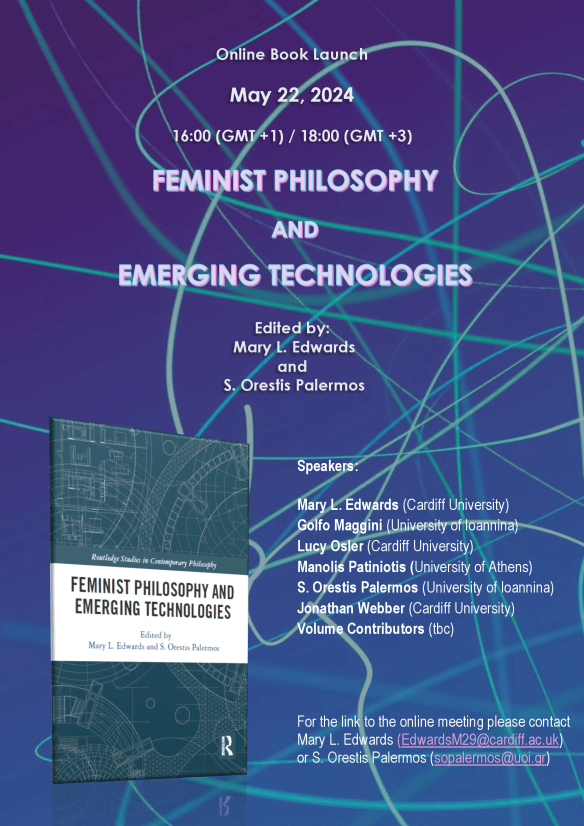
On Wednesday 22 May 2024, the book Feminist Philosophy and Emerging Technologies, edited by Mary Edwards and Orestis Palermos, was launched. The following is an edited version of the speech I gave at the book launch.

THE BOOK Feminist Philosophy and Emerging Technologies is a brave undertaking because it aims at providing, as the authors note, “theoretical considerations about the links between feminist philosophy and philosophy of technology by developing –against the background of emerging technologies– methodological approaches and guidance for bringing those two fields of philosophical research together”. Which is, of course, a very challenging task for the obvious reason that, unlike other areas of philosophy, neither Philosophy of Technology nor Feminist Philosophy are well defined. I do not consider myself qualified to speak about Feminist Philosophy per se, but perhaps I could say a few things about Philosophy of Technology and its interaction with Gender Studies in the context of Science and Technology Studies. I think the publication of this book is very important because, firstly, it encourages us to turn our attention to an understudied area and, secondly, it offers us many useful insights into how the interaction between the two fields can work in the digital and so-called post-digital era.

Unlike science, which has always seen itself as part of philosophy, technology has maintained a difficult and unstable relationship with it. Throughout history, technical work has been the domain of socially subordinate groups – slaves, artisans and women. Philosophy did not deign to engage with this bodily, materialistic and impure activity. Even later, when technical labor became part of what we formally call technology and was associated with the organization of capitalist production, the filth and mud of the capitalist factory kept philosophy away from technology. It was only when technology was experienced as a threat, when the late 19th-century Western societies began to talk about “out-of-control technology”, that philosophy turned its gaze to it. This shift of focus led to an unprecedented upgrading of the status of technology. According to the concept developed in the first half of the 20th century, Technology (in singular and with a capital T) was seen as an essential component of the human condition. However, this essentialist view did not help much in the philosophical understanding of technology. In the context of both phenomenology and Marxism, philosophical reflection had for the most part focused on the externality of technology in relation to human nature and the alienation implied by its use on both personal and social levels.

One had to wait until the emergence of social constructivism in the 1980s and the so-called “Empirical Turn in Philosophy of Technology” in the early 2000s to start seeing the emergence of an interest in the complex and concrete character of technology –of technologies, in fact– and the social interactions they engender. A significant element that these approaches have brought to light is that artifacts are consolidated social relations. This was a first break with the established technological determinism. Langton Winner’s article “Do artifacts have politics?” is the seminal text that initiated this discussion in 1980: technology is not external to society, but an expression of the existing social dynamics. In this sense, there is no radical ontological difference between technology and other social phenomena. A few years later, the concept of “interpretative flexibility” appeared in the work of Pinch & Bijker. Interpretative flexibility makes the social and multifaceted character of artifacts more explicit: artifacts are not monolithic constructions that function as vehicles for the social choices of their makers. On the contrary, both during their making and their use they are subject to multiple interpretations by different social groups. In this sense, technologies are not only consolidated social relations, but also forms of social potentiality. The best known example in Western literature is the process by which the bicycle took its current shape, but an even more important (though poorly studied) phenomenon is jugaad. Jugaad is the repurposing of artifacts in order for them to become useful in contexts different from those they were initially intended for. Indeed, in the greatest part of the non-Western world, artifacts are used in different ways than those intended by their makers.

Does this shift of perspective mean that technology found a new position in philosophy? It’s complicated. It certainly found its position in Science and Technology Studies. But we had to wait for the contributions of philosophers of technology such as Carl Mitcham, Andrew Feenberg and Don Ihde, as well as those of new materialists such as Graham Harman and Levy Bryant, before an alternative philosophical view of technology could emerge. Taking advantage of the elaborations of Science and Technology Studies, these philosophers tried to raise issues concerning the features of technical discourse, the ontology and agency of the artifacts, the relation between nature and techne, the constitution of the technical subject, the transcendence of anthropocentrism, etc. My personal belief is that all these philosophical explorations will still take some time to find their stride. It is important, however, that they bring a promise of renewal not only to Philosophy of Technology, but to philosophy at large.

THE QUESTION of interest here, of course, is to what extent such developments feed into and are fed by Feminist Philosophy. I’ll be cautious: What I see is more of a confluence rather than a convergence. Undoubtedly, for both fields, the proximity to Science and Technology Studies has been a crucial factor of transformation and inspiration. But Donna Haraway’s cyborg, Rosi Braidotti’s cyberfeminism and Karen Barad’s agential realism move in parallel with developments in mainstream Philosophy of Technology without having still found a common ground with it. This is why endeavors like the present volume, which encourage a meaningful osmosis between the two fields, are so valuable.

To the extent that Feminist Philosophy and Emerging Technologies opens or rather updates the discussion on the future of Feminist Philosophy of Technology, I would like to contribute with a reflection on the relationship between Philosophy of Technology and gender. Let me say that in my opinion mainstream Gender Studies have not yet got rid of the essentialist view that perceives technology as an externality. As a result, when it comes to gender we still tend to view technology either as empowerment or as discipline. Which is, of course, absolutely legit. But it’s not enough if we wish to move further and deeper towards a feminist Philosophy of Technology. As I was reading the volume, the idea of a deeper relationship between gender and technology gradually took shape in my mind. I will confess that for this idea I owe a lot to my recent involvement with the work of a not very well known, but in my opinion extremely important French philosopher of technology, Gilbert Simondon. A key idea of Simondon is that technical objects follow their own developmental path, which he calls concretization. In this way they develop the technical abilities that have been passed on to them by human beings, so that they can perform a series of tasks more efficiently. However, they always retain a considerable stock of unformed potential, which enables them to develop further or adapt to environments other than those for which they were originally intended. It also enables them to be combined in many different ways to create technical sets. Something which, however, is not the case in the conditions of capitalism. When we use technical individuals to build technical sets (machines to build factories), we are amputating this potential in order to turn the machines into tools intended for a specific and strictly defined use in the context of the capitalist production. We want machines to be exclusively dedicated to pumping out surplus value from the workers.

For this amputation to be possible, another amputation must have already taken place. Although ontologically and not historically prior, this amputation is modeled on the pre-capitalist mode of production. The machine must be treated as a slave (says Simondon) that lacks any freedom in the choice and execution of work. The slaver’s gaze disciplines the subject of labor and transforms it from a freely developing technical individual into a tool in the service of alien purposes. Historically, we are too familiar with the instrumentalization of machines to truly appreciate the significance of this disciplining process. But consider an example from our time, indeed from the area of emerging technologies. While AI technology has not yet reached its full potential, we are in a hurry to shape it according to certain technical and legal standards that will allow it do some things and disallow others. We are in a hurry to instrumentalize it. However, no matter how familiar we are with this attitude, there is no philosophical reason to take it as plausible or self-evident. Unless… we can ground it in a moral imperative that absolves us from guilt.

And this moral imperative brings us to a third amputation: the dispossession of matter of its ability to act. Since the years of the Scientific Revolution and the founding of modern philosophy, matter has been stripped of all forms of agency – it has become passive and inert, and the only thing it is considered capable of is to be the substrate of the formative activity of the only being that has agency in this world: man. If the first two amputations were produced by the capitalist’s and the slaver’s gazes, the third, more profound amputation is produced by the cyclopean patriarchal gaze –as Haraway would put it–, which imposes silence and immobility on matter itself. And if the first two amputations are associated with the governance of technical sets and the disciplining of technical individuals, here we are faced with a form of necropolitics that decides which beings are entitled to actively participate in becoming and which are not: Matter cannot become anything without the technical intervention of the man-creator-engineer-God. And, conversely, the technical activity of man is the faculty that is entitled to freely shape, according to its inner logic and desire, the passive entities of this world. If the death of the subject marks the end of Western modernity, then the death of matter marks its beginnings.

In my opinion, this is exactly the point where Feminist Philosophy can fruitfully meet with Philosophy of Technology. And that is precisely where the emancipatory potential of this encounter lies. The Feminist Philosophy of Technology must break the three successive encapsulations of technology. Breaking the capitalist-patriarchal shell by critiquing the way in which particular technologies affect the gendered performances of the subjects is undoubtedly important. But it falls by the wayside, insofar as it retains the master-slave relationship between humans and machines. To break this second shell, we need to think of ways to undermine its moral justification. Feminist Philosophy has repeatedly proven, as it actually does in this volume, that it can contribute (perhaps it is the only one that can contribute to such an extent) to undermining the constitutive distinctions on which patriarchal-anthropocentric-technocratic modernity was founded. I think that a crucial next step is to show that part of the project of human emancipation is the emancipation of technicality from human exceptionalism and the acknowledgment of matter’s agency. And to achieve this we must oppose the necropolitics of the patriarchal gaze that normativizes the world by reducing the vast majority of material entities (machines among them) to passivity, inertia and submission. This is where Feminism and Philosophy of Technology meet and this is where both are invited to transcend themselves.

Image credits:Stefan Bjorn Buder, Triangeln, Malmö | Leon Harmon and Ken Knowlton, Studies in Perception, 1967.

Πολιτισμός

ΠΡΙΝ ΑΠΟ ΔΕΚΑ χιλιάδες χρόνια περίπου, οι ανά τον κόσμο πληθυσμοί κυνηγών-τροφοσυλλεκτών άρχισαν να δημιουργούν οικισμούς και να εγκαθίστανται μόνιμα σε αυτούς, εγκαταλείποντας την περιπλάνηση. Στις αφηγήσεις που αναφέρονται σε αυτή την περίοδο συχνά κρύβεται ένα «επιτέλους»: Επιτέλους, οι άνθρωποι απέκτησαν μόνιμο ενδιαίτημα, απαλλάχτηκαν από το άγχος της διαρκούς αναζήτησης τροφής και καταφυγίου και δημιούργησαν τις προϋποθέσεις για την ανάπτυξη πολιτισμού. Όπως φαίνεται από την ιστορία που ακολούθησε, το πεπρωμένο του ανθρώπινου είδους άρχισε να εκπληρώνεται με τη μετατροπή των κυνηγών-τροφοσυλλεκτών σε αγρότες.

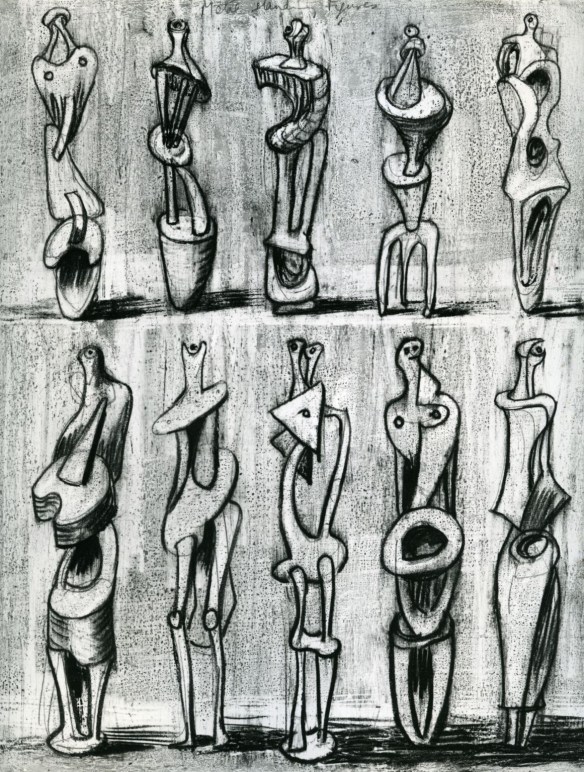
Henry Moore, Ideas for Metal Standing Figures, 1947–9.

Κάποιοι ανθρωπολόγοι διαφωνούν. Η εγκατάσταση των κυνηγών-τροφοσυλλεκτών ήταν η αρχή όλων των δεινών της ανθρωπότητας, ισχυρίζονται. Πρώτον, η εξάρτηση από την αγροτική παραγωγή κάνει τους πληθυσμούς ευάλωτους σε λιμούς. Μια κακή σοδειά καταδικάζει την ομάδα σε παρατεταμένη έλλειψη τροφής και διαδοχικές κακές σοδειές σε εξόντωση. Δεύτερον, ο συγχρωτισμός πολλών ανθρώπων, μαζί με τα ζώα τους, σε μια περιορισμένη έκταση τους καθιστά ευάλωτους σε μεταδοτικές ασθένειες. Οι λοιμοί έχουν κι αυτοί την απαρχή τους στην εγκατάσταση των κυνηγών-τροφοσυλλεκτών. Τρίτον, η περίφραξη και, συνακόλουθα, η υπεράσπιση του «ζωτικού χώρου» εγκαινιάζει μια νέα μορφή ανταγωνισμού μεταξύ διαφορετικών πληθυσμιακών ομάδων και, εντέλει, την ύψιστη τέχνη του πολέμου: Πόση ανθρώπινη εφευρετικότητα δαπανήθηκε στην τελειοποίηση αυτής της τέχνης! Ίσως, τελικά (και καθόλου ειρωνικά), αυτό εννοούν οι ιστορικοί όταν λένε ότι η εγκατάσταση των νομαδικών πληθυσμών έθεσε τις βάσεις για την ανάπτυξη του πολιτισμού…

Τέλος, η δημιουργία των αγροτικών κοινωνιών παγιώνει τον έμφυλο καταμερισμό εργασίας. Ο λίγο πολύ ομοιογενής κόσμος των κυνηγών-τροφοσυλλεκτών παραχωρεί τη θέση του σε μια συμπαγή κοινωνική οργάνωση που επιβάλλει τον περιορισμό του ενός φύλου στον νεότευκτο οίκο, ενώ καθιστά τον ανοικτό κόσμο προνομιακό πεδίο δράσης του άλλου. Περιττεύει, φυσικά, να πούμε ότι η διαχείριση της επισφάλειας του κοινού βίου –η διαχείριση των πόρων της κοινότητας, ο συντονισμός των πολεμικών επιχειρήσεων, η αναπαραγωγή του έμφυλου καταμερισμού εργασίας– θέτει τα θεμέλια της κοινωνικής ιεραρχίας από την οποία εξελίχτηκαν όλα τα κοινωνικά συστήματα.

Ο Hobbes, ασφαλώς, θα μας πει ότι η οργανωμένη συνύπαρξη των ανθρώπων (και η εθελοντική υποταγή τους στον ηγεμόνα) ήταν ο μόνος τρόπος να φύγουμε από το καθεστώς της αγριότητας, στο οποίο τα άτομα διέτρεχαν ανά πάσα στιγμή τον κίνδυνο να γίνουν βορά των δυνάμεων της φύσης ή των ορέξεων των ανταγωνιστών τους. Αντίθετα, οι ανθρωπολόγοι θα μας πουν ότι η εγκατάσταση των κυνηγών-τροφοσυλλεκτών ήταν το μεγαλύτερο λάθος στην ιστορία του ανθρώπινου είδους, το οποίο, άπαξ και διαπράχθηκε από τους ανά τον κόσμο πληθυσμούς, απέκλεισε κάθε ενδεχόμενο επιστροφής στην προγενέστερη κατάστασή τους. Αν ισχύει αυτό, τότε ο ανθρώπινος πολιτισμός δεν είναι τίποτα άλλο παρά το σύνολο των τρόπων που επινοήσαμε για να υποστηρίξουμε αυτή την προβληματική επιλογή και, ταυτόχρονα, να θεραπεύουμε τις συνέπειές της.

Δημοσιεύτηκε στο Πρίσμα αρ. 170, στις 13 Ιανουαρίου 2024.

Αναφορές
Mark Nathan Cohen (1991). Health and the Rise of Civilization. New Haven, CT: Yale University Press.
Richard Manning (2005). Against the Grain: How Agriculture Has Hijacked Civilization. Νέα Υόρκη: North Point Press.